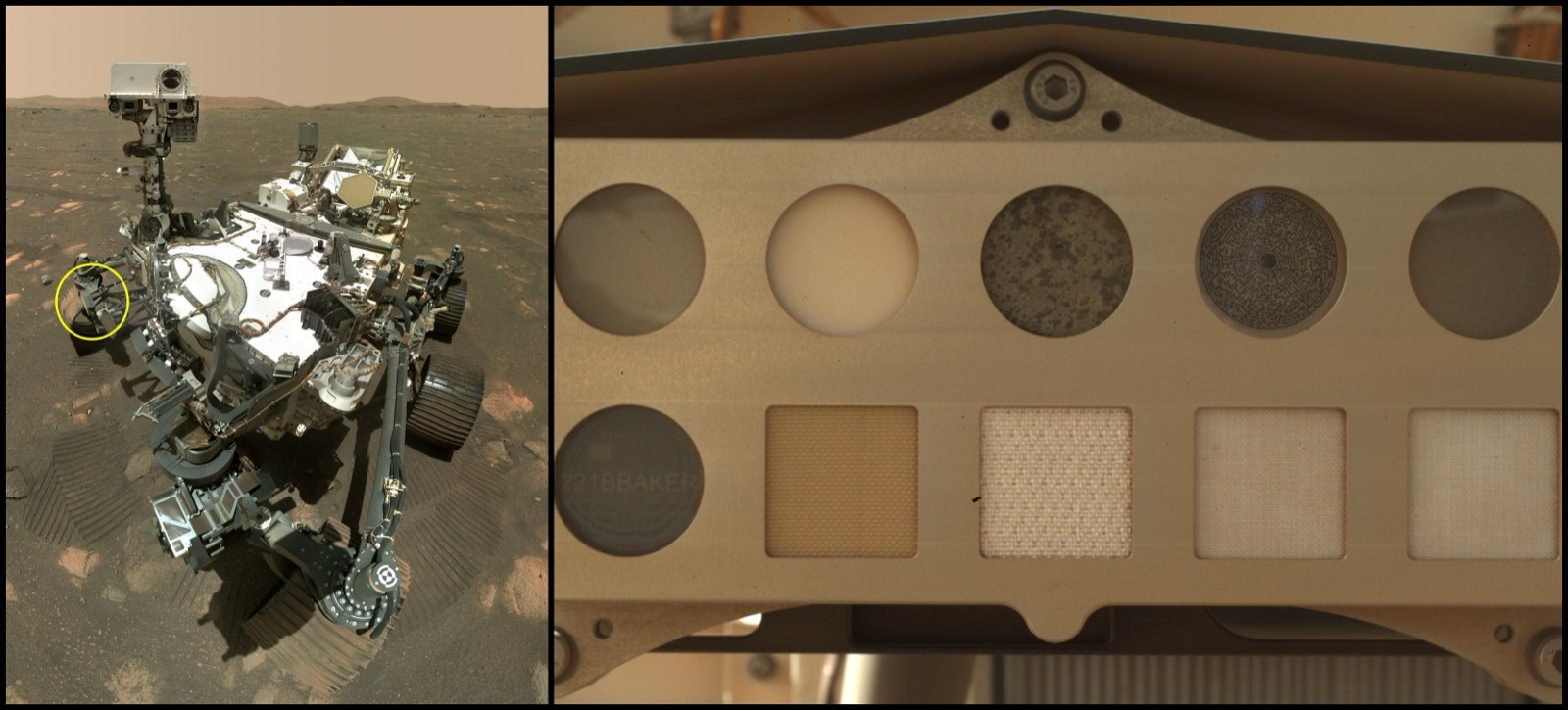
NASA reported on October 26 that Perseverance measurements over 1,645 Martian days reveal fine and ultrafine dust attached to material samples. PIXL measurements included particles around 100 nanometers. The findings are scheduled for publication October 27 in the Proceedings of the National Academy of Sciences.
The agency says different surfaces retained different particle sizes, with the smallest particles remaining through driving and drilling. The observations could inform material selection and ways to limit dust entering living spaces. They are measurements from rover-mounted samples, not results from a crewed Mars mission or proof that a particular protection system is sufficient.
Implications — NAOAT analysis
The engineering value lies in making a future test more realistic. A materials team can use observations from the destination to challenge assumptions made in a terrestrial laboratory. A visibly clean surface, for example, should not automatically be accepted as evidence that a removal procedure has addressed every particle size of interest.
That suggests defining success at the level of the whole operation. A test plan should distinguish dust retained on an outer surface from dust transferred during handling or entry. Designers can then consider how material choice, cleaning steps and the route into a habitat interact, instead of evaluating each item in isolation.
The study also illustrates the value of preserving measurement context. A result is more useful when engineers know which surface was measured and what it experienced. Keeping those details connected to the observations allows a later team to decide whether the evidence applies to its own proposed equipment.
For organizations developing exploration hardware, this is an invitation to sharpen requirements before selecting a solution. The next question is how a candidate design performs under relevant conditions and how that performance is verified. The rover’s observations improve the evidence available for that work; they do not remove the need for it.